How to manage Gen Z employees, from a Gen Z CEO
Most advice on managing Gen Z is written by people who have never been one.

Wil Massara, Blog, Gen Z at work, published 22 September 2026, 5 min read

The best way to manage Gen Z employees is to give them purpose they can see, feedback they can use, ownership of something real, and flexibility judged on output. Then be straight with them when it is not working.
That is it. Nothing in that sentence is new. What is new is that Gen Z will leave if it is missing, where previous generations stayed and complained.
I am not studying Gen Z. I am one. I have been hiring and leading young people since I started Youth Leadership Academy Australia at 15, and I have lost good staff by getting this wrong. By 2030, Gen Z will make up around 30% of the workforce. This is worth getting right.
Why is managing Gen Z different?
Because the environment we grew up in was different, and the management playbook has not caught up.
We got instant feedback on everything from the age of ten. We watched purpose-washing get called out in real time. We saw flexible work proven possible in 2020 and then watched organisations try to take it back. None of that makes us entitled. It makes us hard to fool.
Research backs this up. A 2022 review in Human Resource Development Review (Barhate and Dirani) found Gen Z prioritises mentorship, skill development and clear career pathways above most other factors. A 2023 study in Frontiers in Psychology (Salgado et al.) found we actively seek roles aligned with personal values and social impact. The data says the same thing the exit interviews say.
How do you give Gen Z employees purpose without faking it?
Connect the role to the outcome, out loud, often.
Not a values poster. A line of sight. “The report you built is what the board used to approve the regional program” is purpose. “We’re a purpose-driven organisation” is noise.
And please, no purpose-washing. Young workers are significantly more likely to stay with employers that have a genuine social purpose, and significantly faster to leave one that pretends. We can smell it from the car park.
How often should you give Gen Z feedback?
Weekly, briefly, specifically.
An annual review is an eternity to someone who grew up with a notification for every action. Ten minutes a week with two questions, what’s working and what’s in the way, beats a formal appraisal every time.
And make it honest. The biggest myth about Gen Z is that we cannot take criticism. We cannot take VAGUE criticism. Tell a young staff member exactly what was wrong and what good looks like and most will fix it by Thursday. Tell them “it’s just not quite there” and they will spend the week guessing and the following month looking at job ads.
Should you give Gen Z employees real responsibility early?
Yes. Earlier than feels comfortable.
Some of the most impactful projects YLAA has ever run were led by student volunteers and early-career team members. Give young people ownership of an outcome, not a task, and they bring more creativity, agility and value than most managers expect.
The fear is that they will get it wrong. They will, sometimes. So will your senior people. The difference is that a 22-year-old who is backed early is still at your organisation in three years, running something bigger.
How do you handle flexibility with Gen Z staff?
Measure output, not hours at a desk.
The team member who finishes at 3pm because the work is done is not a problem to fix. The team member who is online until 9pm and delivering nothing is. Most workplaces have the measurement backwards.
Set clear outcomes and deadlines, be explicit about when the team genuinely needs to be in the same room, and then trust people with the rest. Trust is the thing Gen Z is testing for in the first 90 days. Fail the test and the countdown starts.
What makes Gen Z employees quit?
In my experience, in this order: an invisible next step, work disconnected from any purpose, feedback that only arrives once a year, and a manager who says one thing about flexibility and does another.
Pay is on the list. It is rarely first.
What should a manager do this week?
Pick your youngest team member. Book ten minutes. Ask two questions: what’s working, what’s in the way. Then tell them one specific thing they did well and one specific thing to change.
That is the whole method. The rest is doing it again next week.
This is the thinking behind Gen Z at Work, the keynote I deliver to leadership teams and HR conferences. It lands because the person on stage is the person being described.
When did you last ask your youngest employee what was in the way, and actually move it?
Quick answers
What is the best way to manage Gen Z employees?
Give them purpose they can see, feedback that is frequent and specific, ownership of real outcomes, and flexibility judged on output. Then be honest when things are not working. Gen Z leaves managers who are vague, not managers who are demanding.
Why do Gen Z employees leave jobs so quickly?
Usually because the next step was invisible, the work felt disconnected from any purpose, or feedback only arrived at an annual review. Pay is rarely the first reason.
Is Gen Z hard to manage?
No. Gen Z is hard to manage with a 2010 playbook. Change the playbook and the generation is one of the most adaptable, digitally fluent and purpose-driven you will ever lead.
From the road

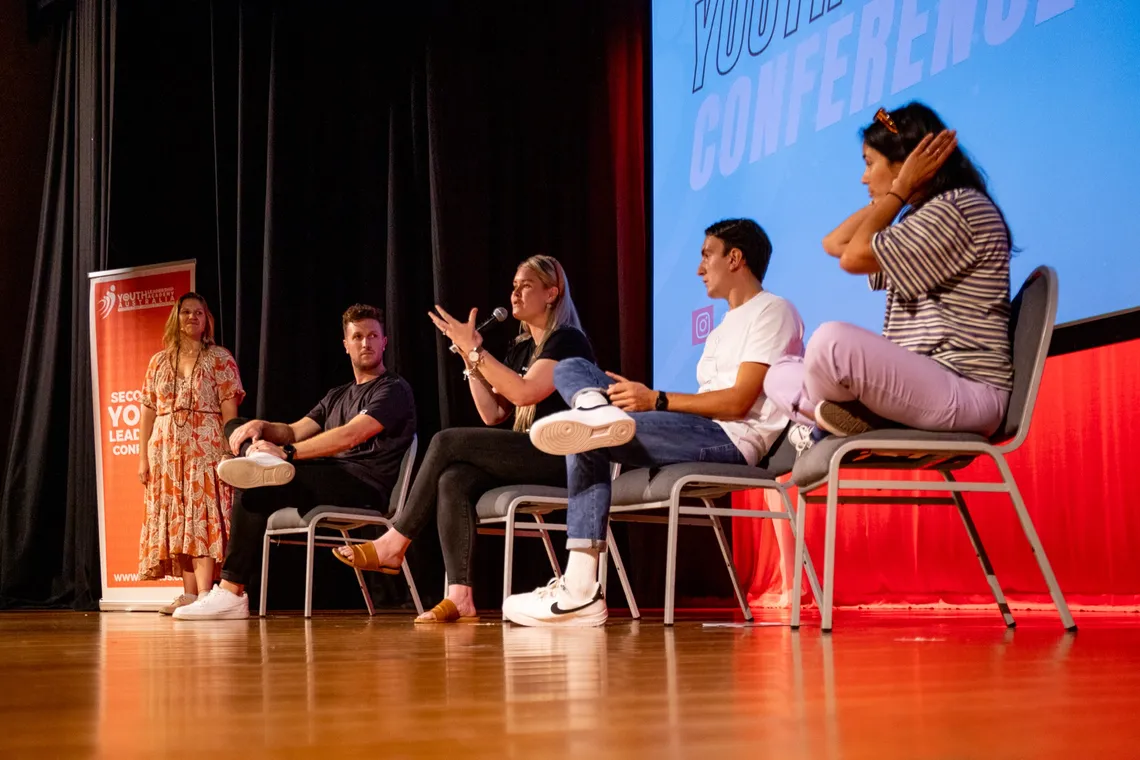

The author
Wil Massara is a Gen Z keynote speaker on youth leadership, education and the future of work. He founded Youth Leadership Academy Australia at 15; it has reached 65,000+ young people across 1,500+ schools. He is General Manager at The Youth Impact Foundation and co-host of Podclass.